Web3D Navigation & User Research
A browser-based 3D experiment connecting navigation interfaces, behavioural telemetry and user evaluation.
See the prototype in action
48 seconds · AI-generated English narration
Minimap navigation, X-ray navigation and a fire-evacuation scenario. Master’s thesis at TUM, completed under academic supervision.
Read the transcript
00:00A browser-based prototype for three-dimensional navigation.
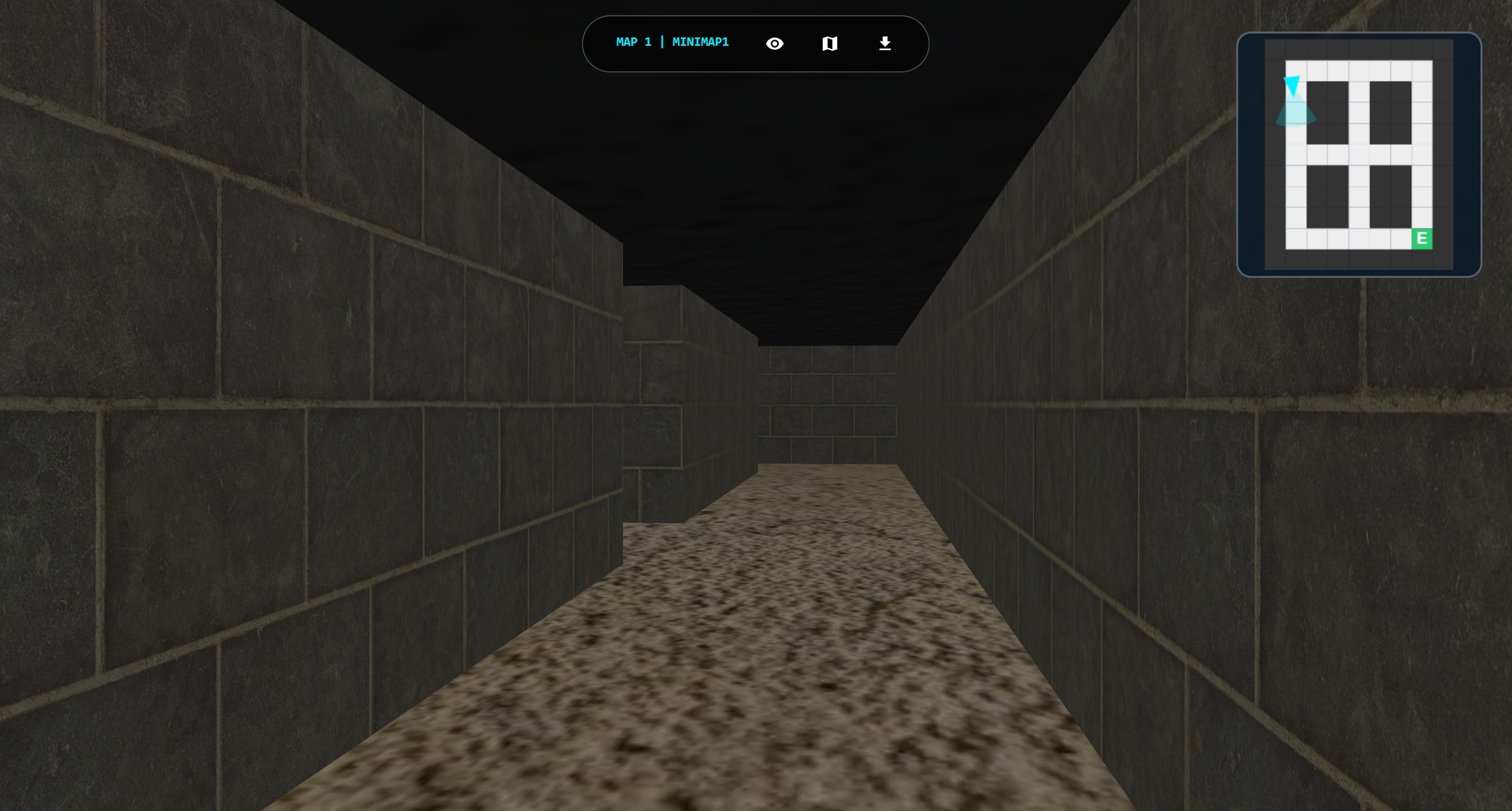
00:05The minimap shows the maze layout, current position, heading, and exit.
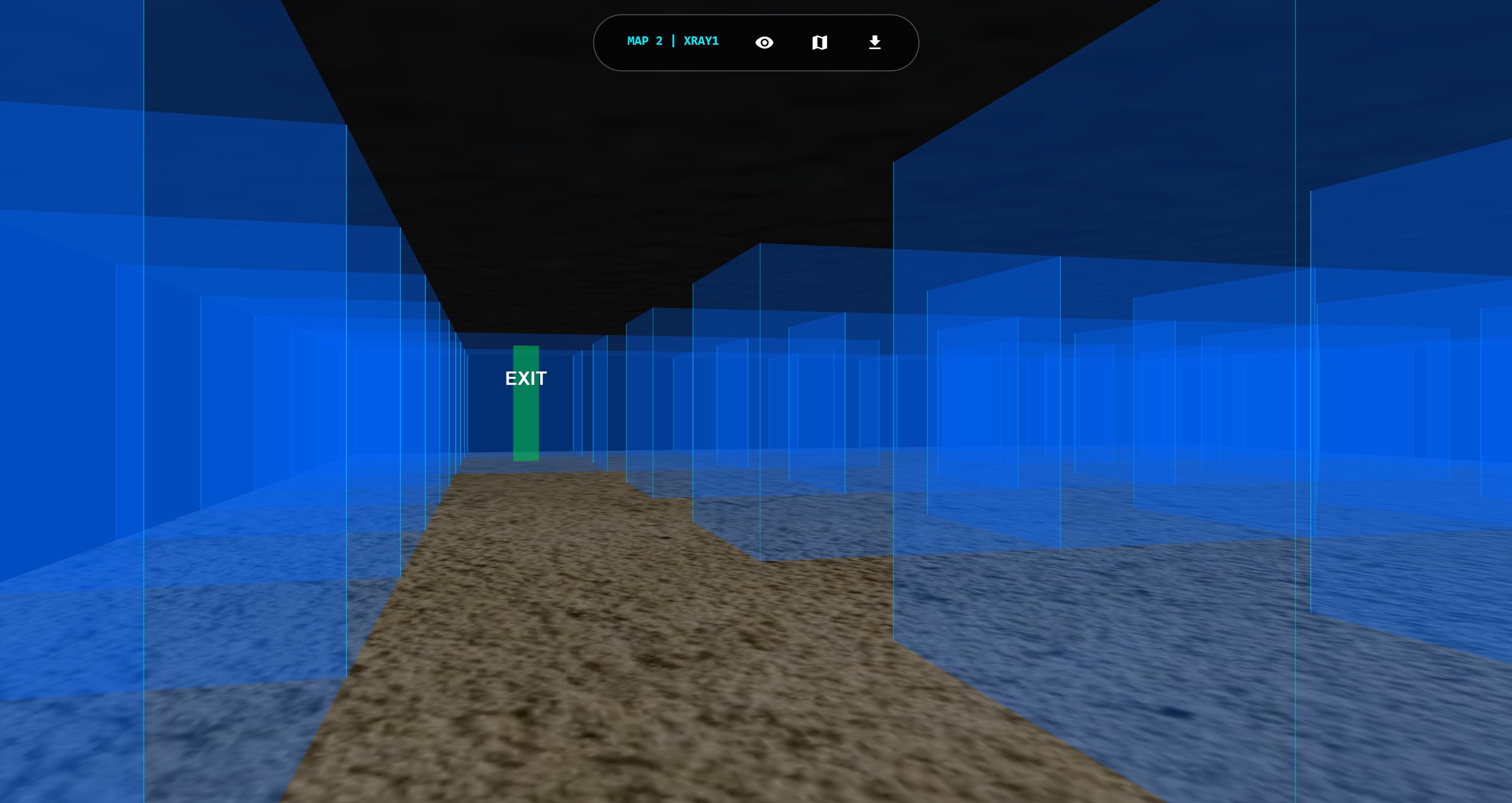
00:14The X-ray view makes walls transparent, revealing the corridors and the exit.
00:22This reveals the surrounding layout during first-person movement.
00:33During evacuation, the navigation aid is switched off.
00:38The user moves through the maze with fire and smoke present.
00:45Explore the full project.
00:00Ein browserbasierter Prototyp für Navigation in einer 3D-Umgebung.
00:05Die Minimap zeigt Grundriss, Position, Blickrichtung und Ausgang.
00:14Die Röntgenansicht macht Wände transparent. So werden Gänge und Ausgang sichtbar.
00:22So wird die räumliche Struktur beim Bewegen aus der Ich-Perspektive sichtbar.
00:33Während der Evakuierung ist die Navigationshilfe ausgeschaltet.
00:38Die Person bewegt sich durch das Labyrinth, während Feuer und Rauch sichtbar sind.
00:45Entdecken Sie das vollständige Projekt.
00:00在浏览器中运行的三维导航原型。
00:05小地图显示迷宫布局、当前位置、朝向和出口。
00:14X-ray 透视视图使墙体透明,显示走廊和出口。
00:22这使用户能在第一人称移动过程中看到周围的空间布局。
00:33疏散阶段关闭导航辅助。
00:38用户在有火焰和烟雾的迷宫中移动。
00:45查看完整项目。
00:00在瀏覽器中執行的三維導航原型。
00:05小地圖顯示迷宮格局、目前位置、朝向與出口。
00:14X-ray 視圖讓牆面透明,顯示走廊與出口。
00:22這讓使用者在第一人稱移動時看見周圍的空間格局。
00:33疏散時,導航輔助工具會關閉。
00:38使用者在有火焰與煙霧的迷宮中移動。
00:45深入了解完整專案。
The question
How well does a navigation aid help people learn an unfamiliar indoor layout and later find another exit route when the original route is blocked?
Interactive application
I implemented first-person controls, collision detection, a minimap and an X-ray interface, together with dynamic fire and smoke.
Data collection
WebGazer.js and a Flask backend connect webcam gaze with structured session data. Movement sampled at 4 Hz, minimap interactions and questionnaire responses support behavioural and gaze analysis in Python.
Study design
28 participants completed a counterbalanced within-subjects experiment; 23 were analysed after outlier removal. Each used both aids. The aid was on during learning and off during the subsequent fire-detour evacuation.
Findings and interpretation
Learning time and distance did not differ significantly. Evacuation trends favoured the minimap, but time and distance differences were not conclusive at the .05 level. 19 of 23 preferred the minimap for learning; 15 of 23 preferred it for evacuation confidence. The findings motivate further testing of combined overview and direct visual cues.
Build the interface.
Understand the user.
I bring software prototyping, data analysis and user research to technical and product-focused teams.
Full application materials available by email.